

Description
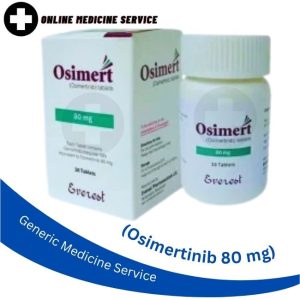
Ositag 80 mg, containing the active pharmaceutical component Osimertinib, represents a precious advance in the treatment ofnon-small cell lung cancer( NSCLC), particularly in those cases whose excrescences have specific inheritable mutations in the epidermal growth factor receptor( EGFR). As a third- generation EGFR tyrosine kinase asset( TKI), Osimertinib is designed to target these mutations widely, offering a more precise and frequently more effective treatment approach than earlier generations of TKIs.
Medium of Action: Precise Targeting of EGFR Mutations
Osimertinib workshop by irreversibly binding to certain mutant forms of the EGFR. Including the sensitizing mutations( exon 19 elisions and L858R mutation in exon 21) and the T790M resistance mutation. The T790M mutation is a common medium of acquired resistance that develops in about 50 of cases who originally respond to first- and alternate- generation EGFR TKIs. By targeting these specific mutations, Osimertinib effectively inhibits the hyperactive EGFR signaling pathways that drive willful cancer cell growth and proliferation. It achieves this by covalently binding to the cysteine- 797 residue of the ATP- binding fund of the mutant EGFR, thereby precluding ATP list and inhibiting the kinase exertion.
One of the most significant advantages of Osimertinib is its selectivity for mutant EGFR over wild- type( normal) EGFR. This selectivity results in a better side effect profile compared to lower picky treatments because it diminishes inhibition of EGFR exertion in normal cells. also, Osimertinib has been set up to have superior penetration of the blood- brain hedge and thus is a pivotal treatment option for cases who have CNS metastases, which are common in metastatic NSCLC.
Two active metabolites, AZ7550 and AZ5104, are formed after oral administration of Osimertinib. AZ7550 is as potent as Osimertinib, whereas AZ5104 is indeed more potent against certain EGFR mutations and contributes to the overall remedial exertion of the medicine.
Suggestions and Clinical Use
Ostag 80 mg( Osimertinib) is indicated in the ensuing conditions of NSCLC
First- line treatment of metastatic NSCLC For cases whose excrescences have EGFR exon 19 elisions or exon 21 L858R mutations, as detected by an FDA- approved test. It’s indicated for use as monotherapy or in combination with pemetrexed and platinum- grounded chemotherapy.
Treatment of metastatic EGFR T790M mutation-positive NSCLC for cases who have progressed on or after previous EGFR TKI remedy. It targets the common resistance medium.
Adjuvant remedy for resectable EGFR- shifted NSCLC Following complete excrescence resection with surgery, to help the rush of the complaint.
Treatment of locally advanced unresectable EGFR- shifted NSCLC in cases whose complaint has not progressed during or after chemoradiotherapy.
The use of Ositag( Osimertinib) is generally guided by molecular testing of excrescence towel for icing the presence of target EGFR mutations.
Lozenge and Administration
The lozenge of Ositag 80 mg is one tablet for oral administration once a day, with or without food. The drug should be taken at roughly the same time each day. For cases with swallowing problems, the tablet can be dispersed in a small quantum ofnon-carbonated water and swallowed incontinently. Do n’t crush, resolve, or bite the tablet.
Treatment with Ositag 80 mg should typically be continued until complaint progression or inferior toxin. Cure revision, similar as interruption or reduction of cure to 40 mg formerly daily, may be necessary grounded on individual safety and tolerability. No cure adaptations are generally necessary for mild to severe renal impairment or mild to moderate hepatic impairment.
Pharmacokinetics
Osimertinib is fairly sluggishly absorbed after oral administration, with a median time to minimal tube attention( C maximum) of roughly 6 hours. It exhibits direct pharmacokinetics and accumulates over a period of roughly 15 days to achieve steady- state situations. The medicine itself has a fairly long half- life of roughly 48 hours, allowing for formerly- diurnal dosing. Osimertinib is excluded primarily through feces( 68) and, to a lower extent, urine( 14). Its major metabolic pathways are oxidation, primarily through CYP3A, and dealkylation.
Possible Side Goods
Despite being well- permitted overall due to its particularity, Osimertinib also produces numerous side effects. Common side goods generally correspond of
Dermatologic Rash, dry skin, pruritus, nail diseases( e.g., fineness, inflammation, pain, separation from nail bed), mucositis.
Gastrointestinal Diarrhea, nausea, puking, loss of appetite, constipation.
General Fatigue, headache.
Hematologic Lymphopenia, thrombocytopenia, anemia, neutropenia.
More serious, however less common, lateral goods bear immediate medical attention
Interstitial Lung complaint( ILD)/ Pneumonitis Cough, briefness of breath, or fever that’s new or worse. Maybe life-hanging.
Cardiac Events QTc extension( electrical complaint of the heart that can lead to irregular jiffs), cardiomyopathy( decaying of the heart muscle), and congestive heart failure. Cases with underpinning cardiac ails or those taking other QTc- dragging medicines bear monitoring.
Serious Skin responses: Rare but serious responses including Stevens- Johnson pattern, erythema multiforme, and poisonous epidermal necrolysis.
Optical disturbances: Eye greenishness, eye vexation, or eye pain, or changes in vision, including keratitis( inflammation of the cornea).
Aplastic Anemia is A blood complaint that’s rare but life-threatening.
Medicine Relations
Osimertinib is metabolized by CYP3A. therefore, strong CYP3A corrupters ( e.g., rifampicin, phenytoin) can mainly reduce situations of Osimertinib, conceivably dwindling its effectiveness, and are generally contraindicated. On the other hand, strong CYP3A impediments( e.g., itraconazole, ritonavir). Can boost situations of Osimertinib, and careful monitoring for toxin is warranted. Caution should also be exercised with concurrent administration of other medicines that protract. The QTc interval with Osimertinib due to a heightened threat of cardiac arrhythmias.
Preventives and Warnings
Before and while administering Ositag 80 mg, healthcare professionals should
Be watchful for the appearance of ILD/ pneumonitis and conduct regular cardiac monitoring, especially in cases with cardiac threat factors.
Advise ladies of reproductive eventuality to use effective contraception during and for 6 weeks after the last dose since Osimertinib may beget detriment to the future child. In most cases with womanish mates of reproductive eventuality should also use effective contraception for 4 months after the last cure.
Examiner complete blood counts periodically for any possible hematologic venom.
Advise cases of the symptoms and signs of serious adverse responses and the necessity to inform a healthcare provider right down.
Ositag 80 mg (Osimertinib) is a targeted medicine that has revolutionized the prognostic of EGFR- shifted NSCLC cases. Its picky medium of action, exertion against resistant mutations. And central nervous system penetration make it an extremely precious addition to the evolving geography of perfection oncology. Still, careful case selection, watchful monitoring for side effects. And consideration of implicit medicine relations are essential to its safe and effective use.



Reviews
There are no reviews yet.